
Consultations conducted as part of the Horizontal Timetable Project (HRJ) are intended to help develop recommendations regarding the implementation of the transport market opening. They should also result in the identification of tools for the public sector that will enable the creation of market conditions open to competition, conducive to growth in transport services, whilst ensuring the protection of passengers’ interests and the stability of the market’s functioning.
The opening of the rail market should not be an end in itself, but a tool for improving the service offered to passengers and the functioning of the rail system. Simply announcing tenders or issuing open access decisions will not ensure that new operators enter the market overnight. What is of decisive importance is the creation of market conditions, as well as their stability and predictability, for which the state is responsible in the case of both subsidised and commercial transport.
High level of interest in the consultations
Twenty-three domestic and foreign entities took part in the consultations held at the turn of 2024 and 2025. In-depth interviews were conducted with fifteen of them in the form of questionnaires and bilateral meetings. The aim was to understand the perspective of potential market participants, particularly regarding the expected rules for its future operation. The consultations therefore focused on the planned subsidised services, which will be operated on behalf of the minister responsible for transport and commercial services, i.e. funded exclusively from ticket revenue.
Polish railways – today
Currently, long-distance trains in Poland are almost entirely operated by PKP Intercity. This amounts to around 500 trains a day. Most of them are funded from the state budget (Intercity and TLK categories). Only a few dozen of the company’s services are commercial trains, funded by ticket revenue (Intercity Express and Intercity Express Premium).
Only a few trains per day are the recently launched commercial services of private operators – Leo Express and Regio Jet.
The Polish market has potential
During the consultations, 10 operators declared an interest in operating publicly funded services, whilst 7 entities expressed an interest in launching commercial services at their own expense.
This is one of the key takeaways from the consultations: the Polish market is attracting interest. However, this does not mean that these declarations will automatically result in the introduction of many new trains from various operators.
Competition brings not only benefits but also challenges that must be managed. The example of RegioJet, long-distance operator that recently ceased commercial passenger services on domestic routes, shows that a sustainable market presence requires both adequate capabilities on the part of the company and favourable market conditions. This is particularly important in the case of public service transport, where continuity of service is of key importance. Therefore, it will be important for the state to create the conditions for the stable and step-by-step development of new operators. Examples of major investments by operators with significant capital, such as Italo operating in Italy or Iryo operating in Spain, primarily concern high-speed networks, which is also significant in the context of the planned launch of Polish high-speed rail.
Stability and predictability
One of the key topics of the consultation was the stability of market development. Railway Undertakings called for the organiser to draw up a schedule of planned tenders, setting out the dates of subsequent procedures and their parameters: geographical scope, operational volume and contract duration. The market expects tenders to be announced gradually and for varying periods, which will help maintain continuous engagement among operators. Predictability is also important for commercial transport. RU-s pointed out that their development depends on their ability to gain access to infrastructure, and decisions on open access are issued for a limited period — a maximum of 5 years. Another problem highlighted was the lengthy procedure for obtaining it.
Lack of transport data
The lack of knowledge regarding historical transport data was identified as a significant barrier to market entry. This gives established operators an advantage. For new entrants, this poses a significant problem when calculating a tender bid, particularly if the contract involves assuming the risk associated with ticket revenue.
Access to rolling stock
RU-s pointed out that access to rolling stock could be decisive in securing a competitive advantage in future tenders. In their view, vehicles purchased with EU funding — for example, 300 carriages and locomotives subsidised by the National Development Plan (KPO) to the tune of over PLN 2 billion — should be made available on an equal footing.
The idea of creating a rolling stock pool also gained the support of stakeholders.
Is cooperation between public and commercial transport possible?
The possibility of using hybrid solutions, combining features of commercial and subsidised services, was viewed positively. This could apply to services that would operate commercially on some sections and receive budgetary support on others.
Many stakeholders welcomed the proposal for so-called ‘synergic stops’. In the event of an increase in the number of commercial services, this solution would allow for the subsidisation of stops at specific stations.
– To maintain the high growth rate of passenger numbers, further development of rail services is essential. Examples from the Czech Republic, Germany and Sweden show that in the subsidised transport segment, market liberalisation has led to reductions in unit subsidies for transport of up to 20–30 per cent. This means that for the same amount of money, there can be more trains in the timetable, modern rolling stock can be purchased, or more seats can be provided on trains. This is particularly important because it is currently often impossible to buy tickets for a seat at short notice – says Piotr Rachwalski, a Member of the Board of Centralny Port Komunikacyjny, the company managing the Port Polska project and leading the Horizontal Timetable Project.
The Horizontal Timetable Project responds to these trends through the systematic expansion of transport services across the country. It sets out the directions for the development of transport services and their coordination at national and regional levels. An update for 2035 will be published in May, based, among other things, on the results of public consultations and meetings with rail transport organisers at the provincial and conurbation levels. The year 2035 has been adopted as a milestone due to the planned launch of the full Y high-speed rail line.
Experts from Port Polska are participating in the work of the Ministry of Infrastructure and the Centre for EU Transport Projects (CUPT) on the preparation of a new transport plan for 2030–2034, so that some of the HRJ’s objectives can be implemented earlier. The transport plan will form the basis for launching tenders for domestic and international rail connections. Furthermore, the Ministry of Infrastructure, through CUPT and in cooperation with Port Polska, will conduct preliminary market consultations in accordance with the Public Procurement Law, which will concern the competitive selection of operators for the provision of domestic and international passenger transport services in the years 2030–2034. Port Polska’s support for CUPT is being implemented on a project basis and covers not only the timetable but also activities related, among other things, to the integration of fares and timetables for transport services and the introduction of AeroExpress services.
Furthermore, Port Polska, in collaboration with Polskie Linie Kolejowe, is implementing the Integrated Rail Network (ZSK) project, which will define the target network in Poland, including investments planned for implementation after 2035. The ZSK concept will be published in June this year.
Report on consultations with potential operators:
https://hrj.gov.pl/wp-content/uploads/2026/05/Raport_konsultacje_HRJ_przewoznicy_kolejowi_operatorzy_Prezentacja_EN.pdf
Event details:
• Date: Thursday, 25 September 2025
• Time: 12:15 PM – 1:45 PM
• Venue: TRAKO Conference Centre | 1st floor, Room 1C
• Languages: Polish / English (simultaneous interpretation)
• Admission: Free
Poland on the verge of market opening
The panel will feature representatives of public institutions responsible for shaping the market, as well as operators and international experts with experience in functioning on liberalised markets.
The panel will be divided into two parts:
Part I: Institutions and the Market – Preparing Poland for Liberalisation
This part will feature representatives of key institutions involved in the market opening process, such as the Central Communication Port, Centre for EU Transport Projects, Ministry of Infrastructure, Office of Rail Transport, and PKP Polskie Linie Kolejowe.
• Piotr Rachwalski – Member of the Management Board, Central Communication Port
• Joanna Lech – Director, Centre for EU Transport Projects
• Michał Gil – Member of the Management Board, Director of Operations, PKP Polskie Linie Kolejowe
• Michał Jasiak – Director of Strategy Implementation and Railway Subprogram Planning, Central Communication Port
• Marcin Trela – Vice President, Office of Rail Transport
The debate will be moderated by Dr. Jakub Majewski – President of the ProKolej Foundation, Assistant Professor at the University of Warsaw.
Part II: Voice from Europe – Experiences from Liberalisation
The second part of the panel will focus on foreign experiences related to market opening and competition development, including examples from the Czech Republic, Spain, and Italy, and the best practices arising from them:
• Andrea Giuricin – Transport Economist, TRA Consulting, World Bank, University of Milan • Prof. Juan Montero – Florence School of Regulation, UNED Madrid (National University of Distance Education)
• Peter Köhler – CEO, Leo Express • Radim Jančura – CEO, RegioJet • Marek Rudzianiec – Deputy Director of Timetable Office, PKP Intercity
The debate will be moderated by Konrad Majszyk – Communications and Media Expert at the Central Communication Port.
Why attend?
The panel in Gdańsk will be a place for: • exchanging experiences with countries that have already undergone liberalisation, • discussing the best regulatory models and market practices, • reviewing the role of the state, operators, and investors in the market opening process, • seeking solutions that ensure fair competition, better quality, and accessibility of rail services.
We invite everyone interested in the future of rail transport in Poland. The panel is an excellent opportunity to exchange views and establish contacts with representatives of institutions and the market.
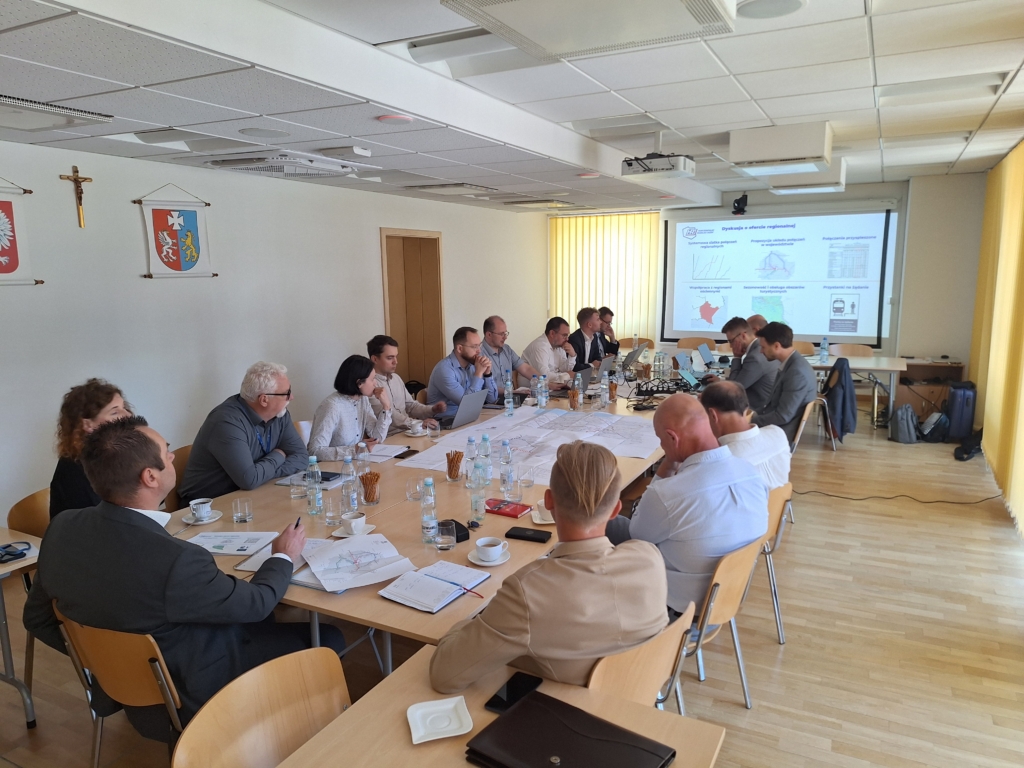
The consultation process began in April 2025 with the team’s visit to the Marshal’s Office in Szczecin (April 16th). Subsequent meetings were held in Zielona Góra (May 9th ), Łódź (May 22), Olsztyn (June 9th ), Rzeszów (June 18th), Lublin (June 24th), Poznań (July 2–3rd), Kraków (July 14th), Toruń (July 24th), and Katowice (August 4–5th). The remaining consultations across other voivodeships are scheduled to be completed by early October 2025.
The HRJ team is represented by the Ministry of Infrastructure, Centralny Port Komunikacyjny (CPK), the Centre for EU Transport Projects (CUPT), and PKP Polskie Linie Kolejowe (PLK S. A., infrastructure manager) – institutions that significantly influence the organization and operation of long-distance rail services in Poland. This cross-institutional collaboration ensures coherence in carried works.
Each workshop is structured into two key parts:
1) Presentation and discussion of remarks from regional transport authorities regarding the long-distance rail offer.
2 )Review of the planned regional transport services in terms of their coordination with the long-distance network.
This process aims to build a coherent national passenger rail system through long-term service and timetable planning. Such coordination is particularly important in the context of the planned increase in both long-distance and regional train services on certain routes, which face existing infrastructure constraints.
During the 1st part of the workshops on long-distance services, the HRJ team presents detailed blueprint for each railway corridor running through the respective voivodeship. Regional transport authorities have the opportunity to propose adjustments to corridor layouts, stopping patterns, or service frequency.
In the 2nd segment focused on regional services discussions are based on initial service concepts submitted by all 16 voivodeship-level organizers, as well as by the Warsaw Public Transport Authority (ZTM) and the Upper Silesian-Zagłębie Metropolis. These discussions covers the layout and frequency of services, potential for intermodal integration, seasonal (tourist) demand, and long-term plans for the reactivation of railway infrastructure.
The consultations led by the HRJ team with regional and metropolitan transport authorities represent one of four key paths in the development of the Horizontal Timetable. Other paths include public consultations, discussions with prospective operators, and coordination with neighboring countries.
The outcome of this process will be a revised structure of railway corridors, to be finalized and publicly presented in Q4 2025. Ultimately, the planners aim to establish a stable and consistent timetable framework for the years 2031–2035, aligned with infrastructure capabilities and providing a coherent national network of both long-distance and regional rail services.
Implementation of the Horizontal Timetable (HRJ) in Poland from December 2030, and the expected launch of high-speed rail services by the mid-2030s, will present an opportunity to attract new long-distance rail transport operators to the Polish market.
It is crucial to diversify the number of operators in passenger rail transport. For public service obligation (PSO) trains, this diversification can break the monopoly of the incumbent operator, who is usually the national operator. The primary benefit is a reduction in the cost per service unit, which arises from market competition. This enables the procurement of more trains (increased operational performance) for the same expenditure and leads to improved service standards. The advantages are also apparent in commercial services, which do not receive state subsidies. International examples from the Czech Republic, Italy, and Spain show that having multiple operators competing for passengers on the same route results in a broader range of services (trains run more frequently than with a single operator), lower ticket prices, and enhanced service quality. In both PSO and commercial services, the market expands—more trains are introduced. Ultimately, the incumbent operator loses relatively little market share and simultaneously improves its efficiency due to the competition.
As part of the Project, efforts are being made to encourage rail operators to explore the development opportunities in Poland’s rail sector. These actions must be proactive—hence, the Ministry of Infrastructure, CPK, and PLK S.A. participated in the World Passenger Festival held on 25-26 June 2024. This event is one of the key gatherings in the passenger transport industry, attracting many significant stakeholders. During the event, representatives of the Horizontal Timetable Project delivered a presentation on “Horizontal Timetable: Integrated Clockface Timetable as a Key Measure to Liberalize the Long-Distance Railway Market in Poland” (available via the link). The presentation outlined the prospects for the rail transport market in Poland, the objectives of the Horizontal Timetable Project, and the details of the consultation process with potential operators.

The joint participation of the Ministry of Infrastructure, CPK, and PLK S.A. in the event aimed to send a strong message that Poland is serious about its commitment to implementing the Fourth Railway Package for long-distance services from December 2030. The event also highlighted the benefits of market liberalization. Additionally, discussions were held with representatives of transport operators and professional associations, encouraging them to take part in the consultations.
Current and prospective transport operators wishing to participate in the consultations are requested to register by 31 August 2024 by completing the application form. Details can be found in the “Consultations with Potential Transport Operators” section.